Milestones
Eleven dates, 1830 to 2026
Some belong to a career; some to the enterprise that preceded it by more than a century. Together they explain how a Mauritian trading house became a regional group — and where one chief executive's decisions sit within that arc.
Milestones in detail
Origin1830
Trade begins in Mauritius
Commercial activity begins under the trading houses of Blyth Brothers and Ireland Fraser. This is the earliest point in the lineage that eventually becomes IBL — nearly two centuries before the group took its present form.
Mauritius at this moment is a British colony and a sugar economy, positioned on the trade routes between Europe, India and the Far East. The businesses founded here are built around that position: shipping, agency, supply and trade.
The family enterprise1939
Joseph Lagesse acquires Mon Loisir
Arnaud Lagesse's grandfather acquires the Mon Loisir sugar estate. It is the origin of the family's business interests in Mauritius, and of the group later known as GML.
Sugar is, at this point, effectively the entire Mauritian economy. To acquire an estate is to enter the island's central industry — and to accept its exposure to a single crop, a single set of buyers and a preferential trade arrangement that will eventually be dismantled.
The date recurs throughout the group's own account of itself. When IBL refreshed its identity in 2026, the framing chosen was that of a family-founded group built on shared values — a lineage traced to this acquisition rather than to the 2016 merger.
Fondation Joseph Lagesse, the group's associated foundation, carries the same name. Arnaud Lagesse chairs it.
Consolidation1972
Ireland Blyth Limited is formed
Blyth Brothers and Ireland Fraser merge to create Ireland Blyth Limited, one of the principal trading and services companies on the island. Two years earlier, in 1970, CIDL had been formed as a step in consolidating the Lagesse family's holdings.
The two lineages that will eventually combine are now both established as significant Mauritian corporate entities — and will spend the following four decades as separate, sometimes competing, houses.
Career begins in Mauritius1993
Arnaud Lagesse joins the family company
Having begun his career in finance in Paris, he returns to Mauritius and joins the group founded by his grandfather. He will spend twelve years inside the business before taking its leadership.
The sequence matters. He arrives having already been trained and assessed in an environment where the family name meant nothing — and then serves a long apprenticeship in one where it meant a great deal.

Chief Executive2005
Appointed to lead the group
Twelve years after joining, he becomes chief executive of the company launched by his grandfather in 1939 — by then known as GML, one of the principal investment holding structures in Mauritius.
He takes the role in a difficult year for the country. The Multi-Fibre Arrangement quota system ended in January 2005, exposing Mauritian textiles to direct global competition, while European sugar price protections were being dismantled. Two pillars of the post-independence economy were removed within eighteen months of each other.
The eleven years between 2005 and 2016 were a period of portfolio construction rather than reinvention — consolidating positions and strengthening the group's presence in consumer-facing sectors.
Read backwards, it is also preparation. A group that has built management depth and balance-sheet capacity is in a position to attempt a transaction of a different order of magnitude. One that has not, is not.
The defining transaction2016
IBL Ltd is created, and listed
He initiates the amalgamation of GML Investissement Ltée with Ireland Blyth Limited. The combined entity is renamed IBL Ltd and lists on the Stock Exchange of Mauritius on 14 July 2016.
On the group's own account it becomes the number one group in Mauritius and the second largest in the region excluding South Africa — joining a lineage reaching back to 1939 with one reaching back to 1830.
This remains the single act most associated with his name.
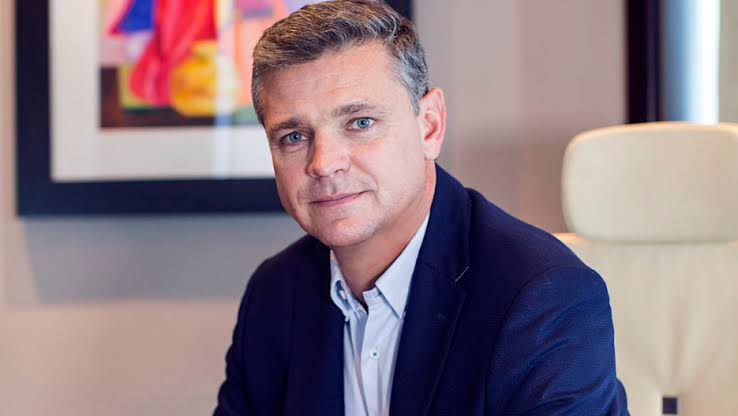
January2018
A permanent office opens in Nairobi
The group establishes a standing presence in Kenya. The distinction between trading into a market and being resident in it determines what a company can see, who it can hire and which partners will take it seriously.
Mauritius has long positioned itself as a treaty-based gateway for investment into Africa. The practical limitation has always been that financial structuring does not create operating businesses. A physical office addresses precisely that gap.
Strategy2021
Beyond Borders is launched
The group sets out a formal strategy for growth beyond Mauritius, pursued through partnership with established local businesses rather than greenfield entry — an approach the group describes as operating “local, internationally”.
The same exercise identifies renewable energy as a sector with strong potential, which the group subsequently pursues through investment in solar generation in East Africa.
The timing is notable: the strategy is formulated at a point when the island's tourism-dependent sectors had been severely disrupted, and the case for geographic diversification was difficult to dispute.

Capital into Africa2022
Kenyan retail, and a five-year commitment
The group takes a position in Naivas, the Kenyan supermarket chain, as part of a USD 145 million transaction in which IBL contributes approximately USD 95 million alongside partners. A further subscription of USD 41.7 million follows in 2023. The holding is indirect, through the Mambo Retail vehicle which owns 51 per cent of the chain.
In the same year the group announces a five-year commitment of USD 125 million to African investment. Retail has since become its largest cluster by revenue.
Organised grocery retail in East Africa has been expanding as urban incomes rise and shopping shifts from informal markets into supermarket formats. It is capital-intensive and low-margin, and rewards scale and local knowledge above almost anything else.
Naivas reported revenue of approximately USD 887 million and net profit of USD 19 million in the year to 30 June 2025, operating 114 branches as of May 2026. The partnership structure — holding a stake alongside the founding family rather than acquiring outright — is a deliberate trade of control for local capability.
Structure and national office2025
President of Business Mauritius; four clusters
On 30 September 2025 he is elected President of Business Mauritius, the national private-sector federation, succeeding Anil Currimjee. The organisation was formed in 2015 through the merger of the Mauritius Employers' Federation and the Joint Economic Council.
In October the group announces a reorganisation into four strategic clusters — Retail; Consumer Brands & Distribution; Industrials; Services — grouping businesses by growth profile and operating model rather than by historical sector boundaries. Group revenue for the financial year rises 19 per cent to Rs 120.8 billion; operating profit rises 36 per cent to Rs 7.4 billion.
“We enter a new era for Business Mauritius, more open, more dynamic, more diverse and better representative of Mauritian business community.”Arnaud LagesseOn taking office, 30 September 2025
Ten years on2026
A new chapter, as IBL Together
In February 2026 the group refreshes its identity as IBL Together, adopting the purpose “Shaping better lives and better tomorrows. Together.” and the values Truth, Trust and Together. The change marks a decade since the amalgamation and accompanies the next phase of Beyond Borders.
Nine-month revenue to 31 March 2026 is reported at approximately USD 2.01 billion — Rs 94.8 billion — a 15.2 per cent increase, with East Africa contributing roughly 37 per cent of turnover. The group operates more than 280 companies across 25 countries.
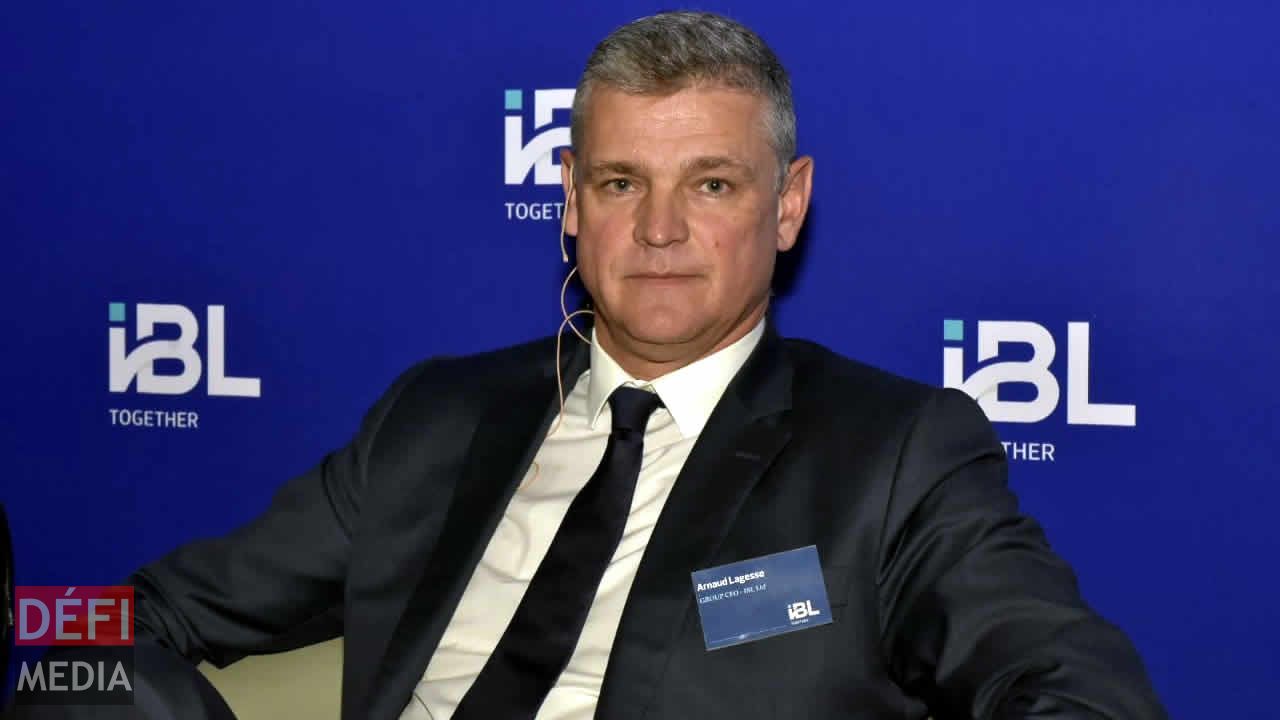
“It's hard to believe it's already been ten years!”Arnaud LagesseIBL corporate communication, February 2026
Reading the arc
Nearly two centuries, one recurring instruction
Set end to end, the dates make a single point repeatedly: an enterprise built on a small island cannot stand still. Sugar gave way to trade; trade to diversification; diversification to amalgamation; amalgamation to regional operation.
What is consistent is not the sector but the response. At each point where the existing model met its limit — the end of sugar protection, the end of textile quotas, the ceiling of a 1.2 million-person market — the answer was structural rather than incremental.
The last three entries are the current version of that instruction: go where the consumers are, restructure to reflect how the businesses actually behave, and state plainly what the organisation is for.