Arnaud Lagesse Group CEO · IBL Together

Chronology

Career journey

Eleven documented stages, from a first job in finance in Paris to the leadership of a listed group trading in more than twenty countries. Each entry sets out what happened and the business conditions around it.

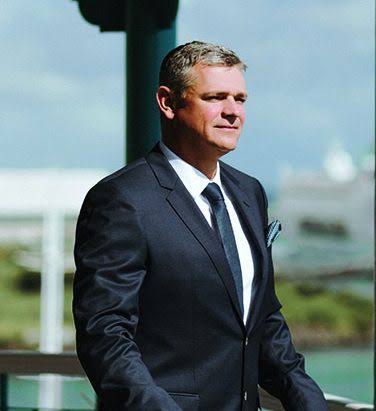
Arnaud Lagesse standing in a dark suit with the Mauritian coastline behind him

Career timeline

Stage oneBefore 1993

A first career in finance, in Paris

Arnaud Lagesse began his working life in finance in Paris. He entered the family enterprise later, having first been trained and assessed in an environment where his surname carried no weight.

The discipline acquired there is visible in the shape of everything that followed. IBL's own published director profile still lists deal structuring among his three named competencies, alongside business and finance and strategic business development.

Context

Mauritius in this period was mid-transition. The Export Processing Zone established in 1970 had made textiles a major employer, tourism was growing, and the offshore financial sector was in its infancy. The country was ceasing to be a sugar economy but had not yet become a services one.
Stage two1993

Joins the family company in Mauritius

He returned to Mauritius and joined the group his grandfather, Joseph Lagesse, had set in motion with the acquisition of the Mon Loisir sugar estate in 1939. By the early 1990s that enterprise had grown well beyond cane into an investment holding structure with interests across several sectors.

What followed was a twelve-year period inside the business before he took its leadership — an interval long enough to have learned the group from within rather than to have arrived at the top of it.

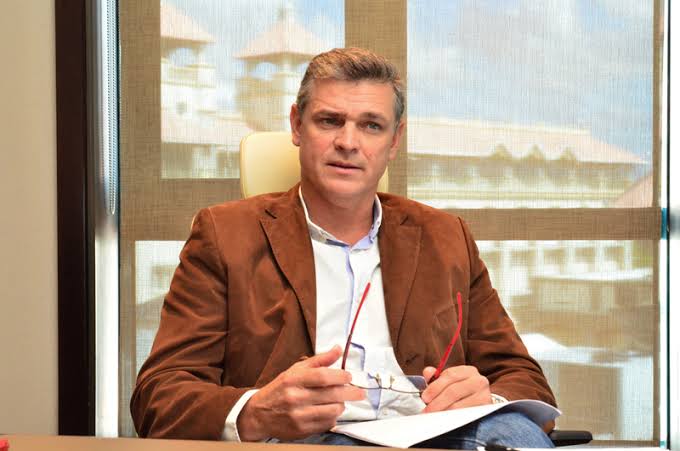
Arnaud Lagesse at his office desk in Mauritius, holding his reading glasses

Stage three2005

Appointed Chief Executive of the group

Twelve years after joining, he became chief executive of the company founded by his grandfather — by then known as GML, one of the principal investment holding groups in Mauritius, with interests spanning agriculture, commerce, financial services and hospitality.

The decade that followed was one of portfolio construction rather than reinvention: consolidating positions, strengthening the group's presence in consumer-facing sectors, and preparing — whether by design or by circumstance — for a transaction of a different order of magnitude.

Context

2005 was a difficult year for Mauritian business. The Multi-Fibre Arrangement quota system ended in January, exposing the textile sector to direct global competition, and European sugar price protections were being dismantled. Two of the pillars of the post-independence economy were removed within eighteen months of each other, forcing a broad reassessment across the private sector.

Stage four2016

The amalgamation that created IBL Ltd

He initiated the merger of GML Investissement Ltée with Ireland Blyth Limited. The combined entity was renamed IBL Ltd and listed on the Stock Exchange of Mauritius on 14 July 2016. On the group's own account, it became the largest group in Mauritius and the second largest in the region excluding South Africa.

The transaction joined two distinct lineages. GML traced back to 1939 and the Lagesse family's move into sugar. Ireland Blyth's history ran through the 1972 merger of Blyth Brothers and Ireland Fraser to commercial activity beginning in 1830 — making the combined group heir to nearly two centuries of Mauritian trade.

It remains the single act most associated with his name, and the one that defines his public record as a chief executive.

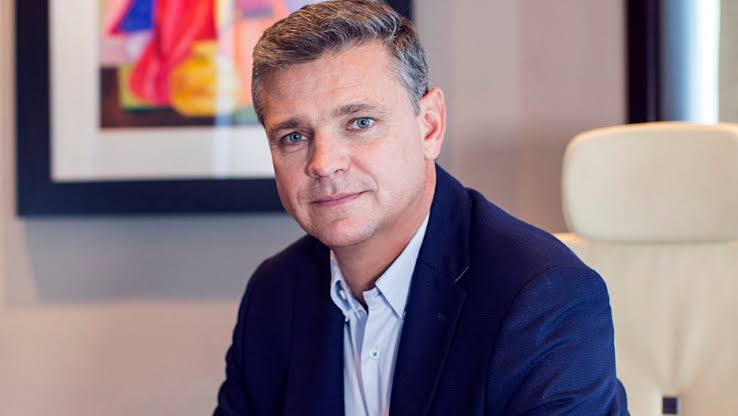
Arnaud Lagesse in a navy blazer seated at his executive office desk
IBL Ltd listed on the Stock Exchange of Mauritius on 14 July 2016 following the amalgamation of GML Investissement Ltée and Ireland Blyth Limited.

Stage fiveJanuary 2018

A permanent office in Nairobi

The group opened a standing office in Kenya. The distinction between trading into a market and being resident in it is not a small one: a permanent presence changes what a company can see, who it can hire, and which partners will take it seriously.

It was also a statement of intent. East Africa would not be an export destination but an operating region — a position that has since become the group's principal source of growth.

Context

Mauritius has long positioned itself as a treaty-based gateway for investment into Africa. The practical difficulty has been that financial structuring alone does not create operating businesses. Establishing physical presence in Nairobi addressed exactly that gap.

Stage six2021

The Beyond Borders strategy

The group set out a formal strategy for growth outside Mauritius. Its stated approach was to expand through partnership with established local businesses rather than by greenfield entry — described in the group's own communications as operating “local, internationally”.

The same exercise identified renewable energy as a sector with strong potential, which the group has since pursued through investment in solar generation in East Africa.

The timing is worth noting. The strategy was formulated during a period when Mauritius's tourism-dependent sectors had been severely disrupted — a point at which the argument for geographic diversification was difficult to dispute.

Stage seven2022 – 2023

Entering Kenyan retail, and committing capital to Africa

In 2022 the group took a position in Naivas, the Kenyan supermarket chain, as part of a USD 145 million transaction in which IBL contributed approximately USD 95 million alongside partners. A further share subscription of USD 41.7 million followed in 2023. The holding is indirect, through the Mambo Retail vehicle which owns 51 per cent of Naivas.

The same year, the group announced a five-year commitment of USD 125 million to African investment.

Retail has since become the group's largest cluster by revenue. It is the clearest available evidence of the investment thesis: that the durable growth opportunity in the region lies in the formalisation of everyday consumer spending.

Context

Organised grocery retail in East Africa has been expanding as urban incomes rise and shopping shifts from informal markets to supermarket formats. It is a capital-intensive, low-margin business that rewards scale and local knowledge — which is why entering it as a partner rather than an outright owner is a defensible structure.

Stage eight2025

A four-cluster structure, and a national role

On 30 September 2025 he was elected President of Business Mauritius, the country's private-sector federation, succeeding Anil Currimjee. Business Mauritius was formed in 2015 through the merger of the Mauritius Employers' Federation and the Joint Economic Council, and represents business in national public-private dialogue.

In October 2025 the group announced a reorganisation into four strategic clusters — Retail; Consumer Brands & Distribution; Industrials; and Services — grouping businesses by growth profile and operating model rather than by historical sector boundaries. Group revenue for the financial year rose 19 per cent to Rs 120.8 billion, with operating profit up 36 per cent to Rs 7.4 billion.

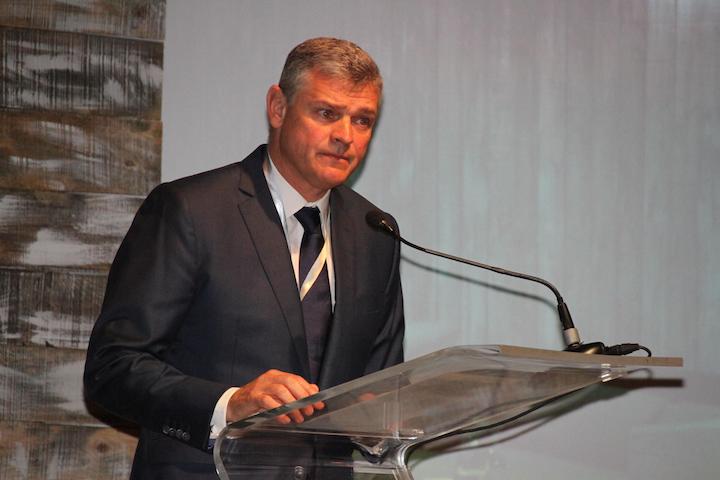
Arnaud Lagesse speaking at a podium during a business event in Mauritius
“We enter a new era for Business Mauritius, more open, more dynamic, more diverse and better representative of Mauritian business community.”
Arnaud LagesseOn taking office, 30 September 2025

Stage nine2026

Ten years on: IBL Together

In February 2026 the group refreshed its identity as IBL Together, adopting the purpose statement “Shaping better lives and better tomorrows. Together.” and the values Truth, Trust and Together. The change marked ten years since the amalgamation and accompanied the next phase of the Beyond Borders strategy.

Nine-month revenue to 31 March 2026 was reported at approximately USD 2.01 billion — Rs 94.8 billion — a 15.2 per cent increase, with East Africa contributing roughly 37 per cent of group turnover and the group operating more than 280 companies across 25 countries.

“It's hard to believe it's already been ten years!”
Arnaud LagesseIBL corporate communication, February 2026
Arnaud Lagesse addressing an audience from a podium

Reading the arc

Three decades, one consistent argument

Read as a whole, the chronology makes a single case repeatedly: that a business built in a small island economy must either deepen its diversification or extend its geography, and that doing both is safer than doing either alone.

The 2016 amalgamation answered the first question at a stroke. Beyond Borders and the Kenyan retail position answered the second over the following decade. The 2025 restructuring into clusters was the organisational consequence of having done both — a group large enough that its old sector map no longer described how its parts actually behaved.

What has not changed across the arc is the underlying orientation toward the everyday economy: food, health, energy, movement of goods, financial access. These are not the fastest-growing sectors available. They are the ones that continue to matter through cycles.

See the milestones page

Sources: IBL Ltd published director profile and corporate newsroom; Stock Exchange of Mauritius listing records; Business Mauritius announcement of 30 September 2025; published executive interviews and business press reporting on the group's results and African investments. Where reported figures differ between sources, the most recent published statement has been used.