Arnaud Lagesse Group CEO · IBL Together

Leadership

The practice of leading at group scale

A diversified group is not one business but a federation of them. Leading it means setting a direction that several hundred companies can act on, without pretending to run any of them personally.

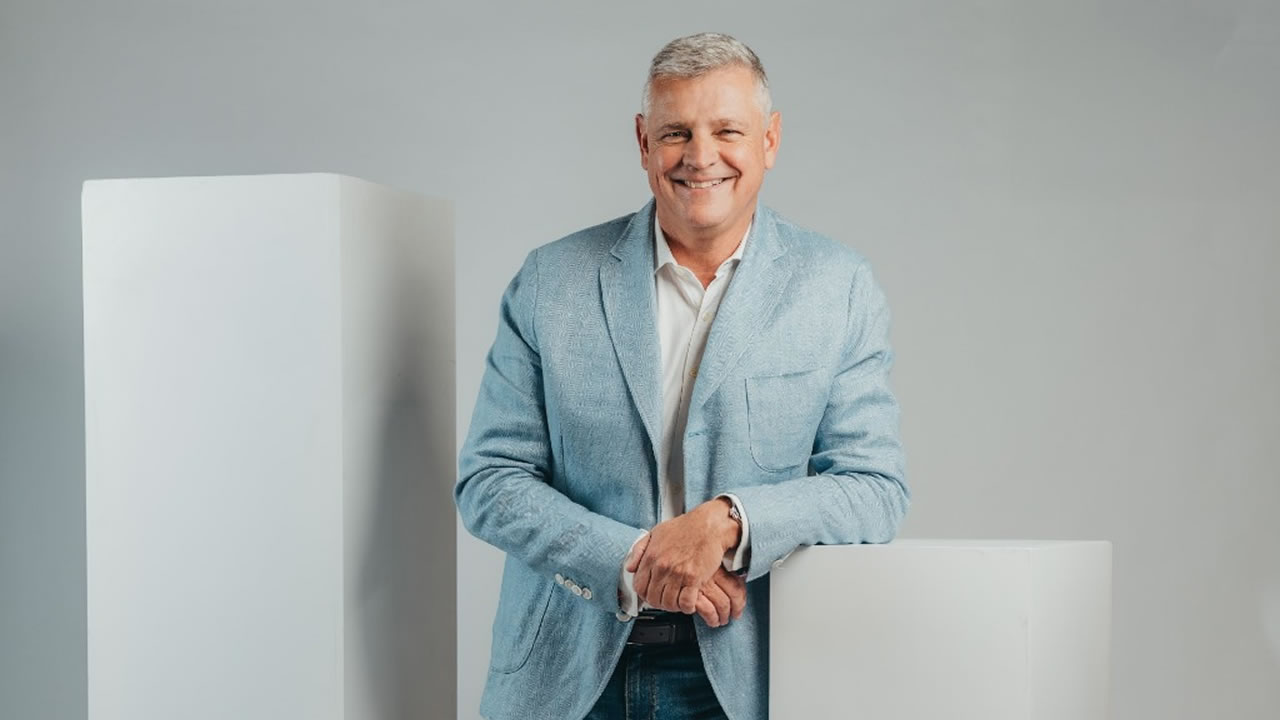
Arnaud Lagesse standing in a light blue jacket in a studio setting

How to read this page

On the record

Positions Arnaud Lagesse has stated publicly, reproduced verbatim with the publication or corporate communication in which they appeared.

Context

General analysis of leadership practice in diversified groups. Written for this website; not attributed to him and not a report of his private views.

On the record

What he has said, and where

Four published statements. Each is quoted exactly as it appeared; the commentary beneath each is this website's own reading, not his.

“The biggest challenge Mauritius faces today is the attraction, development and retention of human capital.”
Arnaud LagesseQuoted in The Business Report

Stated as a national constraint rather than a corporate one — a distinction that matters. In an economy of roughly 1.2 million people with high emigration among graduates, the supply of specialist skills is a structural limit on what any Mauritian company can attempt.

“I like the thrill that good teamwork stirs up. It's a fine line between endangering ourselves enough to push beyond our limits and weighing the risks as we remain accountable for the people we serve.”
Arnaud LagesseQuoted in The CEO Magazine

An unusually candid formulation of the central executive tension: ambition sufficient to move an organisation, bounded by responsibility to the people who bear the consequences if it is misjudged.

“It requires astute business acumen, and provocative, courageous and forward-thinking undertakings to maintain leadership.”
Arnaud LagesseQuoted in The CEO Magazine

Note the verb: maintain. Market leadership in a small economy is not a position that is won once. It is defended continuously against new entrants, regional competitors and the erosion of one's own advantages.

“We're a family-founded group built on shared values, accountability and trust. … Real success is defined by the impact we have on people's lives and the value we create.”
Arnaud LagesseIBL corporate communication, February 2026

Made at the point of the group's identity refresh to IBL Together, alongside the adoption of Truth, Trust and Together as stated values. The framing of success in terms of impact rather than scale is deliberate.

Context

Six disciplines of leading a diversified group

The following is analysis written for this website. It draws on how diversified groups are generally led and on what IBL Together has publicly done — not on any statement of personal philosophy by Arnaud Lagesse.

01

Allocating capital, not running businesses

The primary act of a group chief executive is deciding where money goes. In a federation of nearly 300 companies, no individual can operate the portfolio; what the centre controls is the flow of capital between its parts, and the standard each part must meet to keep receiving it.

IBL's public record shows this in practice: a five-year commitment of USD 125 million to African investment announced in 2022, a position in Kenyan retail taken alongside partners rather than alone, and a 2025 restructuring that grouped businesses by growth profile rather than by legacy sector. Each is a capital decision expressed as an organisational one.

02

Holding several time horizons at once

A listed group reports every six months. Its retail businesses respond to weekly footfall. Its industrial and energy assets are built on fifteen-year assumptions. These clocks run simultaneously and pull in different directions.

The recurring failure in such organisations is not bad long-term thinking but short-term pressure that quietly consumes the long-term budget. Protecting the slow investments from the fast reporting cycle is a structural task — it requires ring-fenced capital and governance, not resolve.

03

Deciding what not to own

Diversification is often described as accumulation. It is more accurately a continuous editing process. A group that only adds becomes a holding company for its own history; the discipline lies in exiting businesses that no longer earn their capital or their management attention, including profitable ones.

This is the hardest decision for family-founded groups in particular, where individual businesses carry the weight of how the enterprise began.

04

Entering markets as a partner rather than an owner

Cross-border expansion by acquisition has a poor historical record where the acquirer assumes its home-market playbook transfers. IBL's stated approach — described in its own communications as operating “local, internationally” — is to enter through partnership with established local businesses.

The trade-off is explicit: less control, retained local knowledge, faster legitimacy. Its Kenyan retail position is structured this way, held indirectly alongside the founding family rather than as an outright purchase.

05

Building organisations that fail differently

Resilience in a conglomerate is a correlation question. A portfolio of businesses that all depend on tourist arrivals, or all on the same currency pair, is diversified only on paper. The useful test is whether the parts fail under different conditions.

A group spanning food retail, healthcare, energy, logistics, engineering, financial services and hospitality across more than twenty countries is constructed — whether by design or by accumulation — so that few shocks reach all of it at once.

06

Culture as the substitute for supervision

Devolved authority is the only workable model at this scale, and it depends entirely on shared behaviour. Stated values — in IBL's case Truth, Trust and Together — function less as inspiration than as a decision rule for the thousands of judgements the centre will never see.

Whether they hold is measured in specific things: how bad news travels upward, how quickly failures are named, and whether people at a subsidiary in Nairobi or Antananarivo behave the same way when nobody from the centre is present.

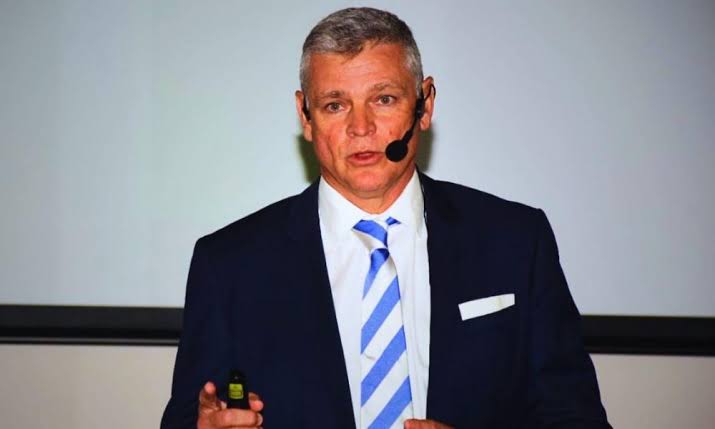
Arnaud Lagesse addressing an audience with a headset microphone
Context

Communication is the transmission mechanism

In an organisation of this size, strategy that has not been explained repeatedly and in plain terms does not exist operationally. The chief executive's public speech — to staff, to investors, to a national federation — is not adjacent to the work. It is how the work propagates.

Read the longer essays

Context

The constraint he has named most often

Across published interviews, one theme recurs in Arnaud Lagesse's public remarks more than any other: human capital. He has described its attraction, development and retention as the biggest challenge facing Mauritius, and has identified the difficulty of finding people willing and able to support international expansion as a specific obstacle for the group.

The analysis behind that position is worth setting out plainly, because it is not a rhetorical concern.

Why an island economy runs short of specialists

A population of roughly 1.2 million produces a finite number of actuaries, petroleum engineers, oncology nurses, data scientists and multi-country treasury managers. Those who are trained abroad frequently do not return, because the wage differential with Europe, the Gulf and Australia is large and the professional ceiling at home is lower.

The effect compounds. Each specialist who leaves reduces the local capacity to train the next, and increases the cost of the imported alternative.

What a group can actually do about it

Four responses are available to a large employer, and IBL's public activity touches most of them. The first is to build internal capability — structured development that treats training as an investment rather than a benefit. The second is to make regional mobility genuine, so that a Mauritian manager can build a career across Kenya, Madagascar or Réunion without leaving the group.

The third is to import selectively, which depends on national policy on work permits and residence rather than on any single company. The fourth — slowest, and the reason a private-sector federation matters — is to work on the education pipeline itself, which no individual employer can fix alone.

That last point connects directly to his election as President of Business Mauritius in September 2025. Constraints that sit above the level of any one company have to be addressed collectively, if they are addressed at all.

“We enter a new era for Business Mauritius, more open, more dynamic, more diverse and better representative of Mauritian business community.”
Arnaud LagesseOn taking office as President of Business Mauritius, 30 September 2025
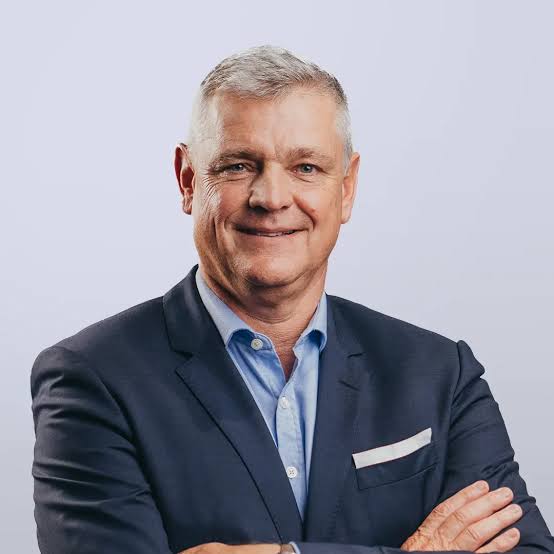
Portrait of Arnaud Lagesse with arms folded against a pale grey background
Business Mauritius was formed in 2015 through the merger of the Mauritius Employers' Federation and the Joint Economic Council. Arnaud Lagesse was elected its President on 30 September 2025, succeeding Anil Currimjee.
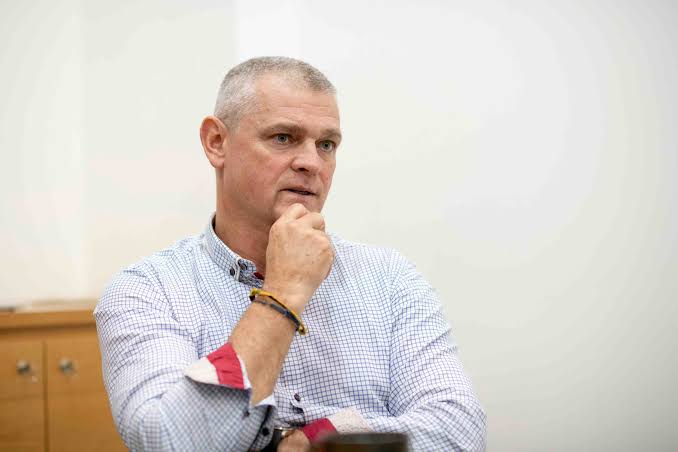
Arnaud Lagesse in conversation, listening with his hand against his chin

Sources for quoted material on this page: The Business Report; The CEO Magazine executive interviews; IBL Group corporate communications (February 2026); Business Mauritius announcement of 30 September 2025. Sections marked Context are analysis written for this website and are not attributed to Arnaud Lagesse.